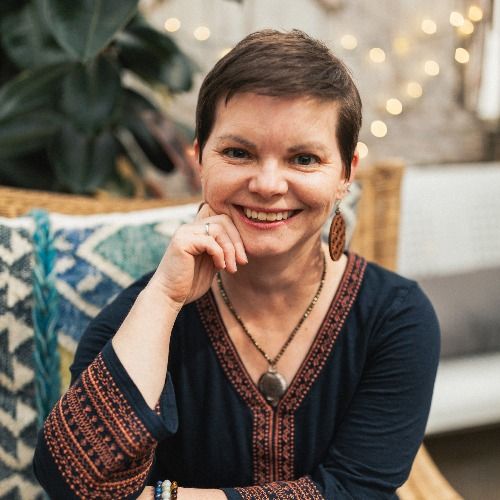
"Do I Even Have Anything Important to Say?"
Book your Life Patterns Review here.
In this episode, I share a personal story about losing my voice during a week when our entire household was sick, and how the quiet brought unexpected relief. That experience led me to a deeper reflection on when I first began to lose trust in my own voice. I trace back how small moments of doubt slowly shaped how I saw myself as a writer and whether I had anything valuable to say.
I share how discovering Human Design and learning about our unique communication styles changed the way I understand my own voice and can help my clients claim their unique voice.
Follow me on Substack: https://substack.com/@ericavoell
Get the latest email newsletter: https://ericavoell.com/newsletter
Connect with me: erica[at]ericavoell[dot]com
Follow me on Instagram: https://www.instagram.com/ericavoell.coaching/
Transcript
Welcome to the Unfolding Podcast,
a space where we explore what
2
:it looks like to really trust
yourself, say no without guilt.
3
:And live your life like it
actually belongs to you.
4
:I'm Erica Voell, Decision Mentor
and Inner-Trust Guide, and I help
5
:women and midlife trust how they are
uniquely designed to make decisions,
6
:reclaim their authority, and
understand their unique strengths.
7
:Using human design as a lens, we clear the
noise of conditioning so their no feels
8
:powerful and their yes feels true, and
they can move forward without self-doubt,
9
:guilt and pressure to prove anything.
10
:On this show, we have honest conversations
about self-trust, boundaries, energy
11
:and identity, especially for women
in midlife who are done living by the
12
:shoulds and second guessing themselves.
13
:If you have taken every personality test,
followed the recommended path, and still
14
:can't shake the feeling that you've been
spending your whole life trying to fit in.
15
:When what you really wanted was to
belong, you're in the right space.
16
:You'll hear stories, insights,
and tools rooted in human
17
:design, coaching, and real life.
18
:Not to tell you what to do, like
another self-help book, but to help you
19
:really hear yourself so you can stop
overthinking and start making decisions
20
:that feel grounded, clear, and true.
21
:Most of last week, our whole
house was sick with a nasty
22
:cold or possibly the flu.
23
:All three of the humans in our
house were sick except for the dog.
24
:Thank goodness Vince was well enough
to be our emotional support dog.
25
:As tends to be the case.
26
:I struggled to talk without
coughing, so I didn't talk and
27
:it was oddly such a relief.
28
:I didn't have to talk.
29
:My husband wasn't talking because
he was struggling to not cough also.
30
:It was the quietest.
31
:Our house has been in a really long time.
32
:Every time I've lost my
voice before I've worried.
33
:What if I can't say what I need to
say in a meeting or to communicate
34
:with patrons at a public service desk?
35
:That was when I was
working at the library.
36
:That was just such a worry for me.
37
:But this time as an entrepreneur,
this time felt like such a relief.
38
:I didn't have to have any reason to
talk, and most of my communication
39
:can be do, done through text or email.
40
:I had to cancel several appointments
because I couldn't talk without coughing.
41
:But everyone was so understanding.
42
:One of those mornings I was sick.
43
:I had this dream about high school,
and upon waking so much came rushing
44
:back about when I started to lose trust
in my voice and what I had to say.
45
:In elementary school and most of
middle school, I was considered
46
:one of the smart kids, but that
was until I did not test into the
47
:honors level classes in high school.
48
:High school was a bit of
a rude awakening for me.
49
:It was the first time I would raise
my hand and would not have the right
50
:answer or know what to say and what
I had to say wasn't good enough.
51
:I did great in science classes, but
it was in my freshman English class
52
:that I started to feel like I didn't
have anything important to say.
53
:My teacher was the cheerleading
coach and she called on the athletes
54
:more than the rest of us, and I was
starting to enter my alternative stage.
55
:I was dressing differently.
56
:I was listening to alternative music
like the Cure and Depeche Mode, and a
57
:lot of the other music you would see
on MTV's 120 minutes on Sunday nights.
58
:I loved to write and we had
daily writings in that freshman
59
:English class that I loved.
60
:Sometimes they were about the readings
for the day, or she would give us
61
:a prompt and I could express myself
through my clothes, what I listened
62
:to, and also through my writing.
63
:Then sophomore year was the
rudest awakening of all.
64
:I enrolled in journalism class
65
:'cause I was so excited.
66
:My parents had met in journalism
school and I wanted to go
67
:to journalism as a career.
68
:I started in journalism class and
it was the first time I experienced
69
:a male chauvinist teacher.
70
:He was the baseball coach and
elevated the voices of the guys
71
:in the class above the girls.
72
:After sophomore year it, I was one of the
last girls in the class, except for our
73
:photographer who she spent a lot of her
time out taking photos around the school.
74
:I became the news editor junior
year, but it became clear that the
75
:baseball jocks who were in class
were there for an easy A, and they
76
:were listened to more than I was.
77
:I.
78
:It was the first time I really
questioned my voice and what I had
79
:to say, but I stayed in journalism
class through the early part of
80
:senior year because I loved writing.
81
:I loved writing the news articles
and I loved writing the feature
82
:stories about fellow students.
83
:I grew up in a family of talkers.
84
:Our large family gatherings were loud
with lots of side conversations and people
85
:talking over each other, but at home we
talked all through dinner, but it was
86
:not this ruckus larger family gatherings.
87
:But I learned something.
88
:I learned to talk to keep
up with the conversation.
89
:I learned to talk to fill the
silence, and still I continued to
90
:write through high school and in
my English classes, my stories and
91
:my papers would get good grades.
92
:So I was shocked when I got
to college and my A papers.
93
:In high school or now getting C's and D's.
94
:I learned that I used a
lot of comma sp places.
95
:I tend to write as I talk, but I never
learned how to fix those comma places.
96
:And as a freshman, I had declared my
major as journalism and I wanted to
97
:follow in my parents' footsteps, but
that changed about halfway through
98
:my first semester, freshman year.
99
:I had a TA that I really liked, and
he told me one day after class when
100
:I had gotten a horrible grade on an
essay, he said, I should reconsider my
101
:major because my writing wasn't good.
102
:I didn't know enough about TAs to
know that this guy was probably
103
:only four years older than me and
I wasn't confident in myself enough
104
:to know to brush off his comment.
105
:He was English ta and I thought if
he knew my writing was bad, then
106
:I figured others would as well.
107
:So I did what any, IM
impressionable freshman girl does,
108
:who is lacking in confidence.
109
:I changed my major.
110
:Looking back, I can see the patterns now.
111
:Every time I thought I had something
to say, someone else's comment or
112
:grade would have me questioning myself,
and I believed them over myself.
113
:I thought they knew better and knew
something that I couldn't see in myself.
114
:As I progressed through my English
classes and required Western civilization
115
:classes in college, I was continually
greeted with less than stellar grades.
116
:I was grateful to eke out a C in
some of those classes, even the
117
:papers, my parents helped me edit.
118
:I was getting Cs in.
119
:But my love of writing was slowly
being killed off, and I began to not
120
:only question whether I had anything
important to say in my writing.
121
:But also to say out loud as I didn't feel
I had a lot to contribute to the classes
122
:that I took until I reached my next
major of social work in my junior year.
123
:After graduation, I didn't have to do any
writing except for form letters because
124
:I was an intern at Planned Parented for
a while between my social work degree
125
:and starting my computer science degree.
126
:In my computer science program,
there was very little writing
127
:that was not technical writing.
128
:No one ever mentioned comma places,
but my love of writing had always
129
:been almost completely killed off
except for random poems that I
130
:wrote here and there in my journals.
131
:So fast forward a few years and the
dawn of personal websites and blogging,
132
:and I started to write again, it
was more like a personal journal.
133
:But I really wrote regularly and I also
married a former English major Shocker.
134
:It really astounds me that I married
an English major, even though English
135
:had been a subject I struggled so much
in college with and in library school,
136
:almost 10 years after graduating with
my undergrad, I struggled with writing
137
:papers, but I felt like I was gaining
some confidence back in my writing.
138
:My husband helped me edit my papers,
and I'll never forget how proud I felt
139
:when he said that a piece that I had
written for my book arts class was one
140
:of the best papers I had ever written.
141
:It was my personal history about reading
how my parents and my grandparents
142
:instilled a love of reading in me.
143
:And after library school, I wrote
book reviews for the library, but I
144
:was never considered a good writer.
145
:I found other ways to express myself
through knitting and sewing and quilting.
146
:And then about two years
ago, something shifted.
147
:I started my business and I had to
write Instagram posts and I felt a
148
:pressure to start an email newsletter.
149
:But even still in the back of my
mind, I didn't, didn't think I was
150
:a good writer because my Instagram
posts didn't gain a lot of traction,
151
:no matter how much I posted.
152
:And my newsletter didn't really grow much.
153
:I was talking about human design
and general life coaching topics.
154
:Usually whatever struck me that
week, I tried following so many
155
:different templates that I had
received from my business coach,
156
:but nothing ever felt like me.
157
:But if they worked for her.
158
:And others.
159
:Then I thought, well,
I should follow them.
160
:I was also buying $27 prompt
guides from various coaches
161
:hoping that something would stick,
something that would sound like me.
162
:And then about a year ago,
something drastically changed.
163
:I learned from a mentor, Julie
Ciardi, that I have a unique
164
:voice based on my human design.
165
:It absolutely changed everything.
166
:Looking at the communication
center, which is also known as the
167
:throat tells us how we communicate.
168
:For me, my center is undefined, which
means it appears white on my chart.
169
:So I don't have a consistent
way I communicate.
170
:Shocker!
171
:I felt so free and a
huge boost of confidence.
172
:I had known that people with an undefined
throat centers had an inconsistent
173
:way of communicating, but I had
not known it in quite the same way.
174
:I learned that it's common for people
with an undefined throat center to
175
:feel that they don't communicate
well because they've either talked
176
:too much to fill the space or they
feel that they, if they don't speak
177
:up, that they won't be noticed.
178
:I also learned that I do have somewhat
of a consistent way that I communicate,
179
:and that's through my experiences.
180
:I speak from my emotions and
feelings and expressing the emotional
181
:tone of the environment I'm in.
182
:I naturally say I feel not because I don't
think something or believe something, it's
183
:just what naturally comes out of my mouth.
184
:Each number within the communication
center expresses itself
185
:differently depending on which
number is either attached to or
186
:pointing toward another center.
187
:So, for example, my daughter expresses
herself through her mind saying, I
188
:think, and I know, well my husband,
he has seven of the 11 gates.
189
:The numbers in his.
190
:Throat center.
191
:So he has multiple ways.
192
:He expresses himself through writing
and art, his beliefs and his opinions.
193
:He tends to say, I think,
and I am, and I have.
194
:And I know a lot of women who have both
defined and undefined communication
195
:centers who don't trust their voices.
196
:I mean, is it any wonder in a world that
can't stop talking and self congratulating
197
:itself for being the loudest with a
president in the White House promoting
198
:misogyny and chauvinistic attitudes?
199
:It really makes me wonder how this is
affecting the girls who are growing
200
:up today and the women who have
come of age in the last 10 years in
201
:this culture of loud male voices.
202
:I mean, that's not anything new.
203
:But the tone seems to have shifted to
shutting down women's voices as much as
204
:possible unless they're promoting the
same hateful and hurtful messages that
205
:women should be quiet and compliant.
206
:Are more women losing the
trust in their own voices?
207
:Are there girls in high
school who are experiencing
208
:something similar to what I did?
209
:So what can you do to gain
trust in what you have to say?
210
:If you don't trust your voice, if
you don't think you have any-anything
211
:important to say, learn about
your human design and what your
212
:unique way to communicate is.
213
:I'm gonna be sharing more about
voice in the coming months.
214
:Because if we feel like we are
always shutting into the void,
215
:we begin to wonder, do I have
anything important to say?
216
:Does my voice even matter?
217
:I can assure you, you have
something important to say.
218
:Everyone has something important to say.
219
:We all communicate differently, and as
we move into a new era, different voices
220
:are going to become more prominent, not
as these know-it-alls and these gurus
221
:and the loudest voices, but it's going
to be collective voices rising up.
222
:We are seeing it happen in Minnesota
with groups of moms and women
223
:who are standing up for immigrant
families, not with one leader.
224
:But as smaller groups who are all
rising together, we all have something
225
:valuable to share, something important
to say, and learning your unique
226
:way of communicating can bring that
confidence and that conviction to what
227
:you are here to share with the world.
228
:I know that this voice stuff
does not live in isolation.
229
:It is one of the roots of the patterns
we all develop, especially when
230
:we've been running on autopilot,
when we've been overgiving.
231
:Saying yes, when we really mean no.
232
:Trying to be the version of us that
makes everyone else comfortable
233
:and who we think we should be.
234
:In the Life Patterns Review.
235
:We look at it, all of it together.
236
:The roles you've picked up, the
patterns you've repeated so often
237
:that you've stopped noticing them.
238
:We start to untangle what's actually
yours and what you've inherited
239
:or picked up along the way.
240
:If you are ready to take a look,
I would love to sit with you.
241
:You can schedule your
review in the show notes.
242
:That's our episode for today.
243
:I hope you are well.
244
:Thank you for listening.
245
:Be well.